What was the central goal?
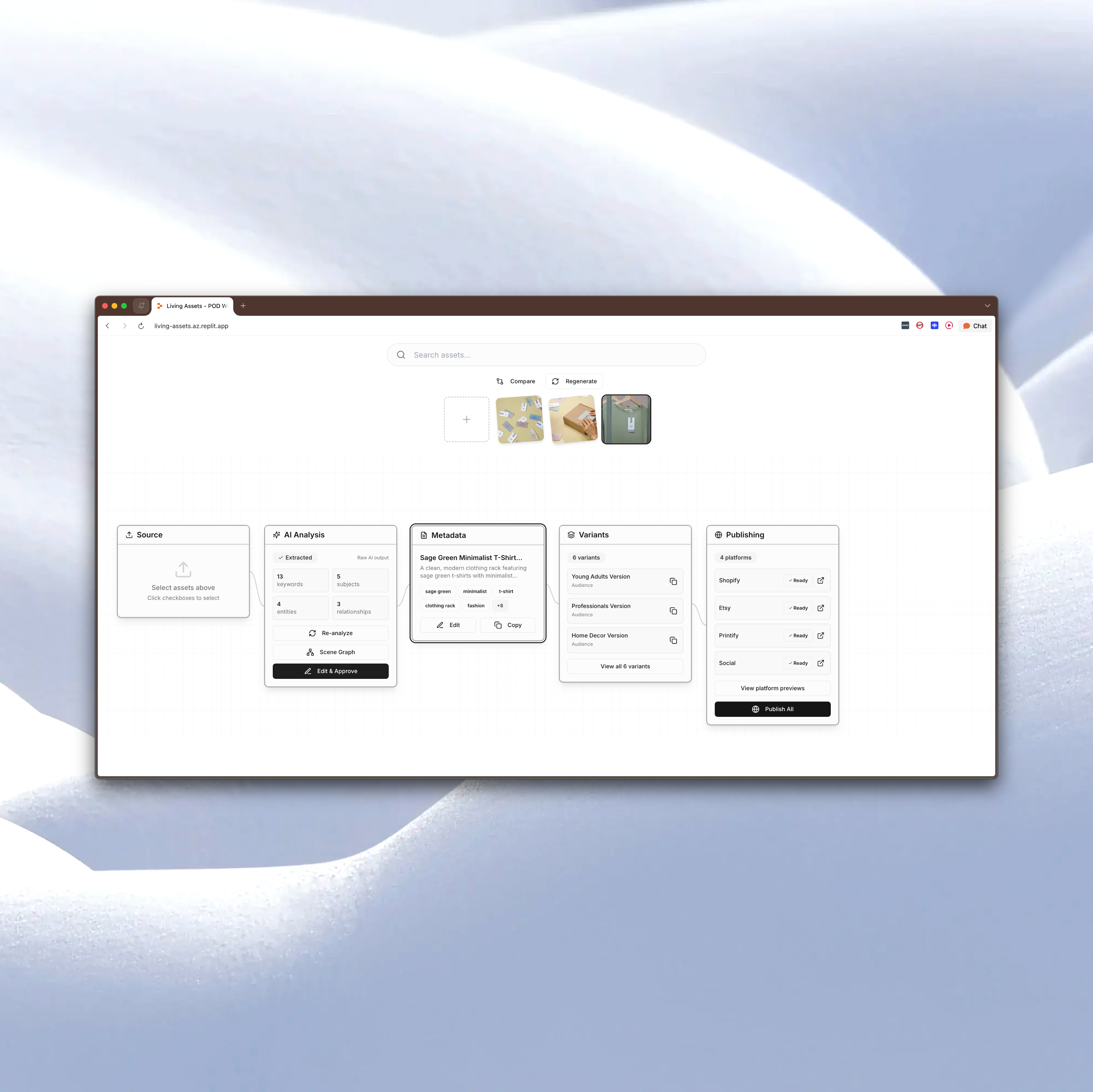
This piece is the growth companion to a separate write-up on the cross-surface content system that delivered this campaign. Where the systems piece covers how dozens of variants were produced and managed at scale, this one covers the underlying growth strategy: why the journey was redesigned, what activation metric anchored it, and what the team learned from running it.
The Opportunity
Photoshop receives well over 700,000 trialists per quarter across All Apps, STE, CCPP, and Photoshop Single App plans. Around 65% engage during the trial and 49% convert. The leading indicator of long-term retention sits earlier than the conversion event: a new user who is active in two consecutive weeks during Month 1 has an 85+% chance of being active in Month 3. Without those two consecutive active weeks, that probability drops to nearly 10%.
Successful onboarding in the first two months can reduce cancellation risk by 55 to 60 percent. This was the number that framedevery decision in the 2H 2022 redesign.
The Hypothesis
The existing onboarding experience had a few problems. Content focused on how features worked rather than what users could accomplish with them. Creative treatment varied widely across email, launch modal, and paid media. And every audience received the same content, whether the user was a marketing manager evaluating Photoshop for branding work or a hobbyist editing family photos.
The redesigned journey rested on a single hypothesis: shifting from feature tutorials to use-case-based behavioral activation, segmented by audience profile and orchestrated across channels, would increase early engagement and reduce cancellation risk in the first two months.
The Activation Metric: 7 Habits of Photoshop
Behavioral data surfaced seven tools that distinguished retained users from churned ones: New Layer, Type Layer, Layer Mask, Spot Heal Brush, Select & Mask, Select Subject, and Adjustment Layer. Adoption of these tools correlated strongly with sustained use. New users in the first four weeks who used New Layer were nearly 18 percentage points more likely to be retained than those who dropped off after the first two weeks. Edit Type Layer showed a ~20-point lift on the same comparison.
The 7 Habits framework gave the team a way to convert a vague engagement goal into a concrete behavioral one. The onboarding journey was structured to drive completion of these specific actions, which gave us a behavioral north star that mapped directly to retention probability.
Segmentation as Growth Lever
Roughly 40 percent of the Photoshop base are Creative Professionals who use the app as their primary craft: designers, photographers, illustrators. Creative Communicators (marketers, social media managers, small business owners using Photoshop to elevate work product) account for another 30 percent. The remaining share, Creative Consumers, brings in amateur photographers, social media enthusiasts, and hobbyists working in their personal lives.
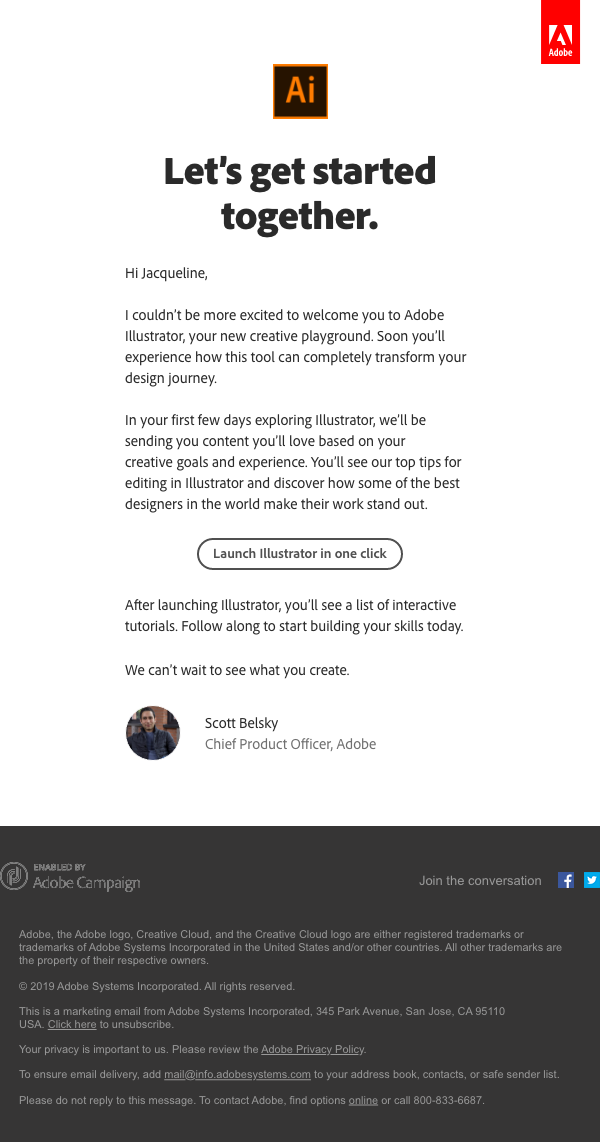
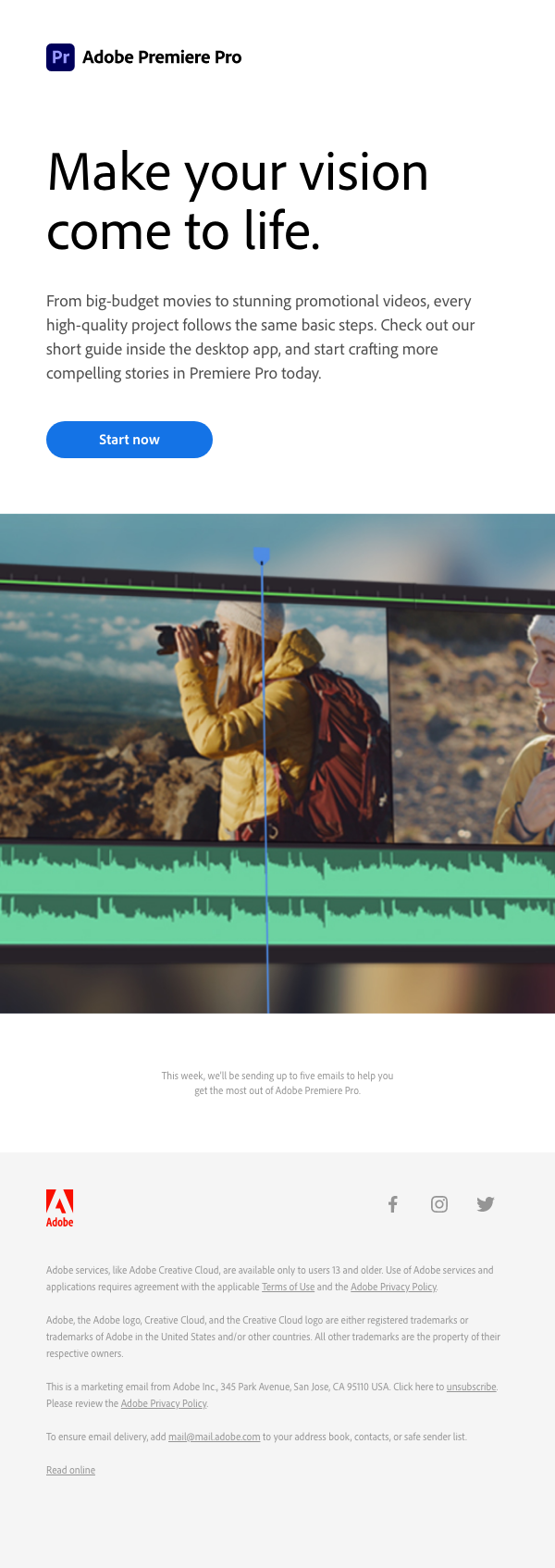
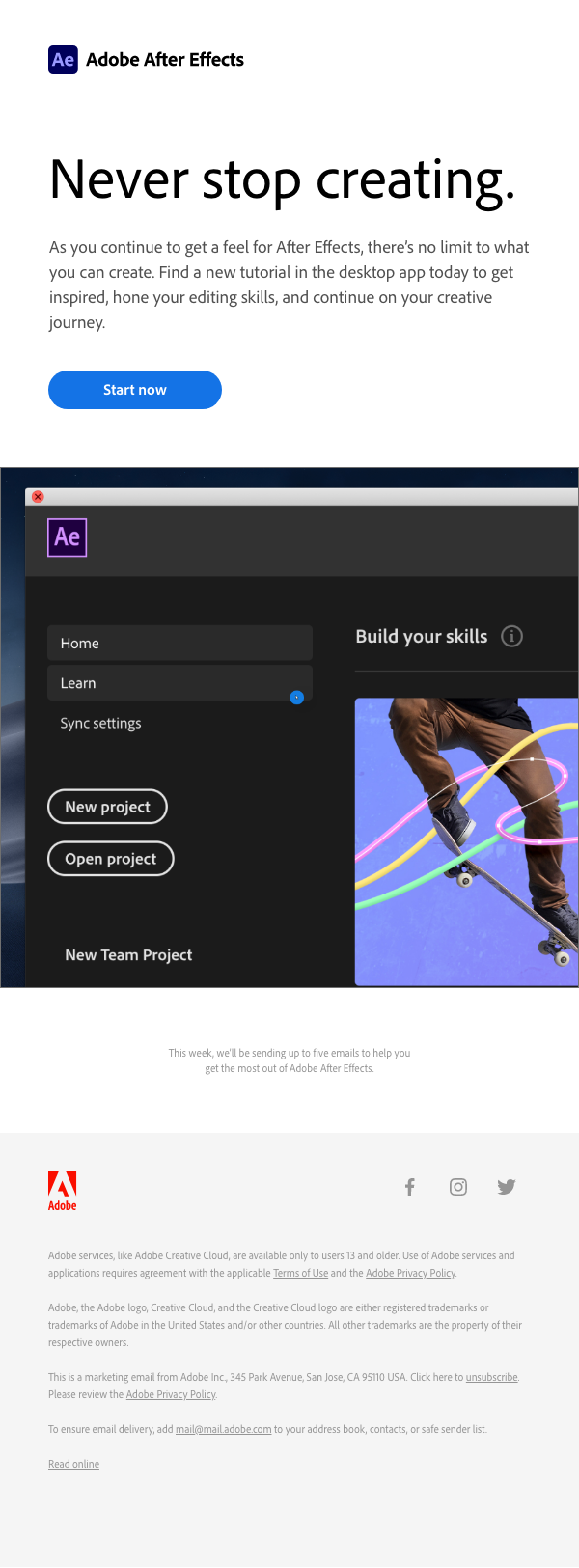
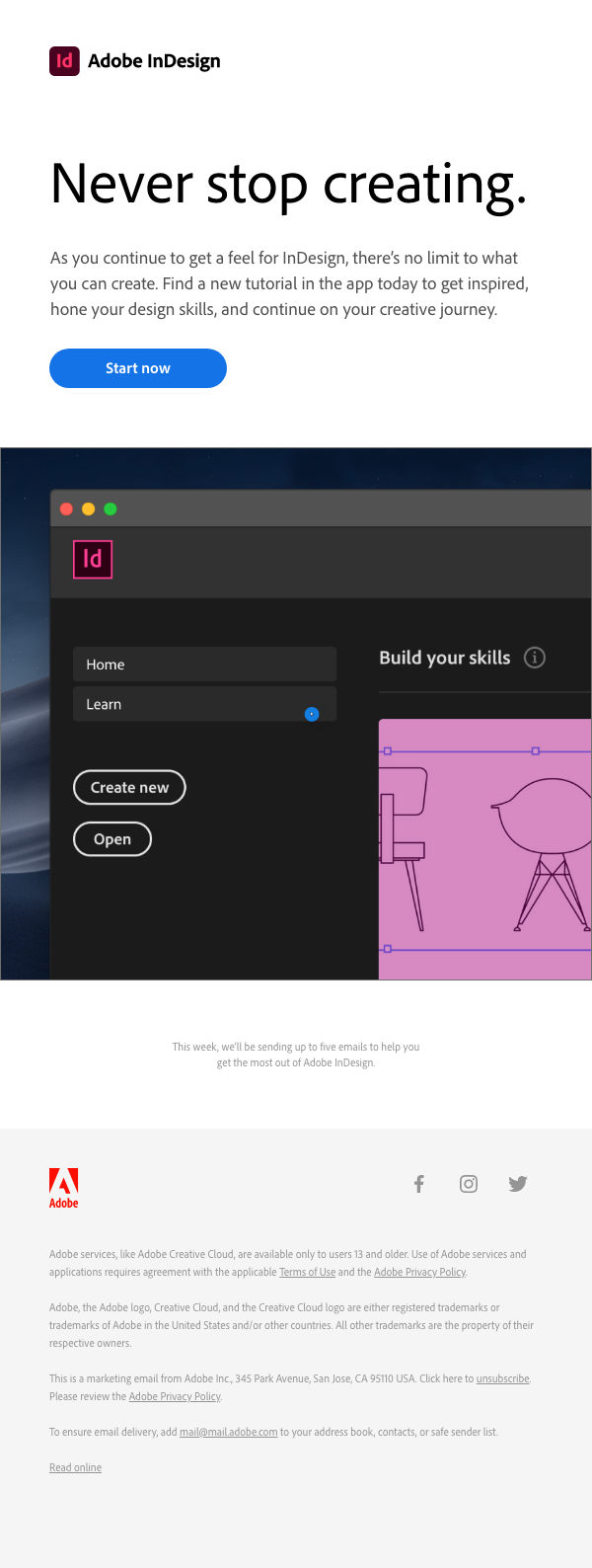
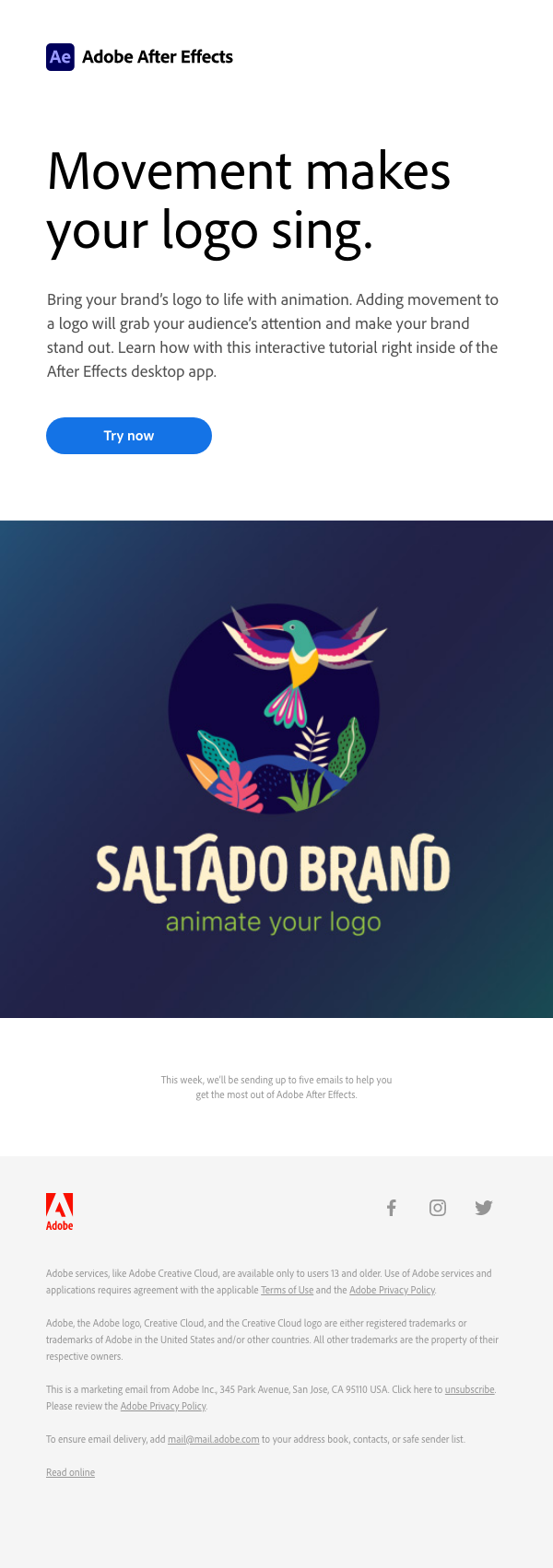
The redesigned journey split into three tracks. Creative Communicators received Design-oriented content built around brand assets, social media graphics, and marketing materials. For Creative Consumers, the journey emphasized Photo work: portraits, travel, nature, pets. Creative Professionals received blended content while a dedicated track was developed.
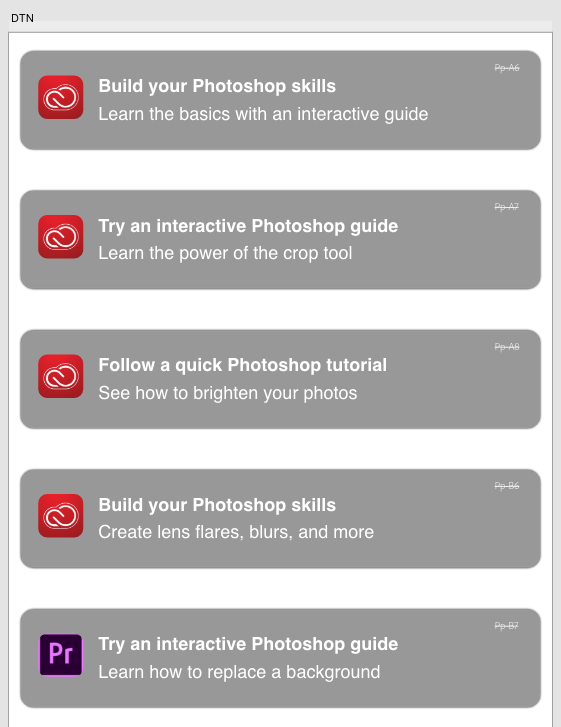
This is where the cross-surface system mattered operationally. Each variant required its own creative treatment, copy, in-app messaging, and paid media. The content management problem became the foundation that made the growth strategy executable.
Phased Delivery
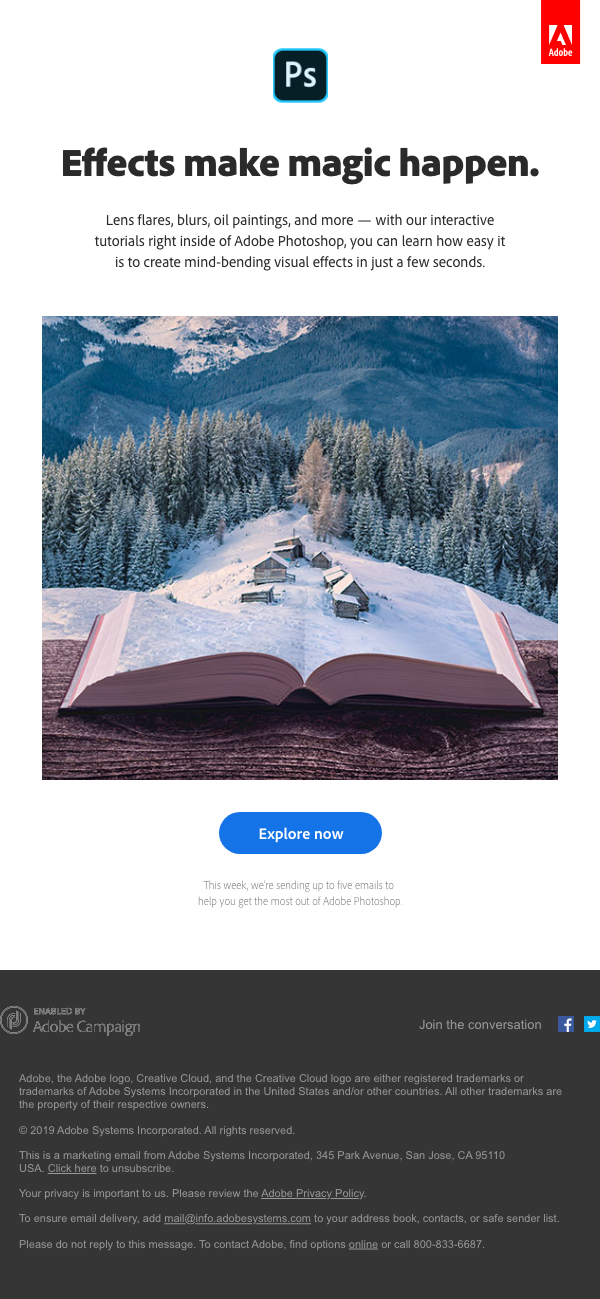
Phase 1 launched the 7 Habits framework in a lite version, using the existing data infrastructure with 24 to 48 hour latency. Surfaces covered were email, in-app notifications, and the launch modal. By Phase 2, the journey moved to real-time instrumentation, full audience segmentation, the Photoshop brand campaign creative treatment, and full cross-surface coverage including paid media, DTN, home screen banner, home screen assets, and CCD/CCH placements.
The phasing reflected a hard constraint. Real-time usage signal was needed to trigger the right content at the right moment, and that engineering work landed later than the design work. Phase 1 shipped the structure with offline-batched personalization. Real-time triggers closed the loop in Phase 2.
What worked (and what didn't)
The TwP cadence test (increasing email frequency during the 7-day trial window from four emails to six) drove a 2.89% lift in in-trial 2+ active days, statistically significant. Six emails during trial became the new control.
The Ps First Mile experiment, which used curated banners in the Discover Panel to drive repeat usage, came in flat or slightly negative across all plans (M1 2+ days active at -0.12% overall). The learning was useful: rotating curated content for new users did not drive repeat sessions. Dynamic content recommendations specific to user behavior were more promising as a follow-up direction. The test reframed our content strategy from "what should new users learn" toward "what is each specific user trying to do right now."
The throughline update, which replaced tool-focused copy with use-case-focused copy and added a Clone Stamp tool email, was scoped for Q3 launch as the next learning iteration. And, all of these phases were launching during a significant Adobe rebrand. This, along with other dynamic changes, necessitated the heavy use of plugins and systems to manage the content pipeline.






And the tl;dr
The 7 Habits framework outlasted the campaign. It gave the Photoshop team an activation metric that connected onboarding work to long-term retention work. The audience segmentation built for this project carried into subsequent messaging strategy across the Photoshop ecosystem.
For me, this work clarified something about growth design at scale: the leverage comes from shared mental models more than individual creative decisions. The 7 Habits framework, use-case-based messaging, and audience segmentation functioned together as the conceptual structure that let dozens of touchpoints across surfaces and products carry the same coherent argument. Plenty of design craft went into the launch modals, email throughlines, and in-app surfaces, but the true multiplier, as always, was the structure underneath.









.png)